
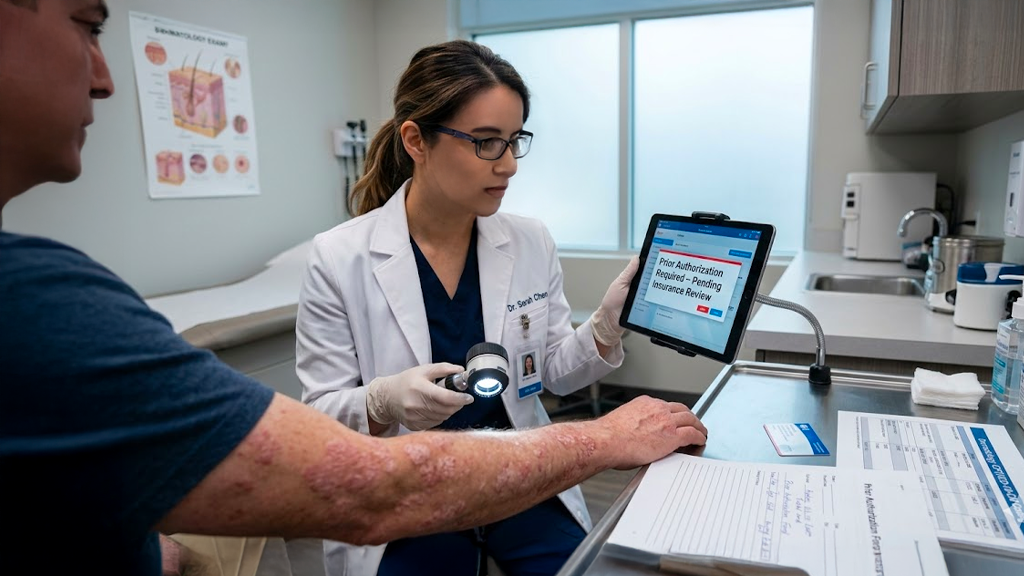
Dermatology Prior authorization remains one of the most operationally demanding components of dermatology revenue cycle management. While intended as a payer cost-control mechanism, the process introduces significant administrative complexity for practices and tangible delays for patients.
Because dermatology frequently involves high-cost therapies and specialty treatments, authorization requests are both common and highly detailed.
Each submission requires precise clinical documentation and strict adherence to payer-specific criteria. Missing information or minor discrepancies can lead to delays, denials, or repeated follow-ups, extending reimbursement timelines and increasing administrative workload.
These delays can disrupt timely treatment for chronic dermatologic conditions, affecting patient satisfaction while also straining practice cash flow.
Table of Contents


Importance of Prior Authorization in Dermatology Billing
Prior authorization (PA) is a utilization management process used by insurance payers that requires providers to obtain approval before delivering certain medications, procedures, or treatments. Without this approval, the insurer may deny payment, even if the service is medically necessary.
In dermatology prior authorization carries unique weight. The specialty frequently prescribes high-cost biologics, specialty medications, advanced therapies, and procedural treatments that are commonly flagged for PA review. As a result, dermatology practices often manage hundreds of authorization requests each year. Industry surveys consistently show that physicians and staff spend multiple hours per day handling prior authorizations, time that could otherwise be dedicated to patient care.
Because dermatologic conditions such as psoriasis, eczema, acne, and autoimmune disorders often require timely intervention, delays in authorization can significantly affect treatment continuity and patient outcomes.
Prior Auth Challenges in Dermatology
Several systemic factors make prior authorization particularly complex in dermatology billing.
First, payer requirements vary widely. Each insurance carrier maintains its own criteria, step therapy protocols, documentation rules, and submission formats. What is approved by one payer may require additional documentation from another.
Second, formularies and coverage guidelines change frequently. A medication that was covered without restriction last quarter may suddenly require step therapy or new clinical documentation.
Third, many dermatology treatments, especially biologics and specialty injectables are high-cost therapies. Payers often apply strict utilization controls to these services, increasing the volume and scrutiny of PA requests.
Finally, renewal authorizations add another layer of complexity. Chronic dermatologic conditions require long-term treatment, meaning practices must monitor expiration dates and resubmit documentation to prevent therapy interruptions.
Administrative Challenges in Prior Authorization Processes
Managing prior authorization is rarely a simple task. Dermatology practices face several operational hurdles:
- Extensive Documentation Requirements
Insurers often request detailed clinical notes, prior treatment history, failed therapy documentation, lab results, and sometimes photographic evidence. Incomplete documentation is a common reason for denials.
- High Staff Time and Resource Allocation
Office staff may spend hours each day completing forms, responding to payer inquiries, and tracking approvals. This administrative burden increases overhead costs and can strain smaller practices. - Denials Due to Missing or Expired Authorizations
Claims submitted without confirmed authorization or after an authorization has expired are frequently denied. These denials delay reimbursement and may shift financial responsibility to patients. - Frequent Policy Updates
Payer criteria evolve regularly, making it difficult for billing teams to stay current. A lack of real-time updates increases the risk of errors and resubmissions.
Together, these challenges create a cycle of administrative rework, delayed payments, and workflow disruptions.
Impact of Prior Authorization Delays In Patient Satisfaction
Prior authorization is not just a billing concern. It directly impacts patients.
- Delays in Treatment Initiation
When approval takes days or weeks, patients may wait longer than clinically recommended to begin therapy. For inflammatory or progressive skin conditions, delays can worsen symptoms and quality of life. - Treatment Interruptions
If renewal authorizations are delayed, ongoing therapy may be paused. This interruption can reduce treatment effectiveness and increase patient anxiety. - Financial Uncertainty
When patients are unsure whether a treatment will be approved, they may hesitate to proceed. In some cases, unexpected denials lead to unplanned out-of-pocket expenses. - Reduced Trust in the Care Process
Although insurers control authorization decisions, patients often associate delays with the provider’s office. Repeated authorization hurdles can erode trust and satisfaction, even when clinical care is excellent.
Ultimately, PA friction disrupts the patient experience at a vulnerable moment when individuals are seeking relief or long-term disease management.
Transparency and Communication in Prior Auth Decisions
Clear communication is critical in navigating prior authorization challenges.
When denial letters lack specific reasoning or fail to outline next steps, providers are forced to guess what additional information is required. This prolongs the appeal process and delays patient care.
Similarly, limited transparency around review timelines makes it difficult to set patient expectations. Patients benefit from proactive updates about authorization status, potential delays, and alternative treatment options when appropriate.
Strong internal communication also matters. Coordinated workflows between providers, billing teams, and administrative staff reduce duplication of effort and prevent missed deadlines.
Improving transparency, both with payers and with patients helps minimize confusion, accelerate appeals, and preserve trust.
Proactive Management of Prior Authorization in Dermatology
Prior authorization remains one of the most significant administrative challenges in dermatology billing services. Understanding its root causes and recognizing its impact on patient care is the first step toward building more efficient workflows and reducing unnecessary friction in the revenue cycle.
Avoiding prior authorization is not realistic. Managing it efficiently is the solution. Structured documentation, centralized tracking systems, trained staff, and proactive follow-ups can significantly reduce approval delays and prevent costly claim denials. Streamlined workflows not only protect reimbursement but also create a smoother, more predictable experience for patients awaiting care.
At the same time, broader reform and clearer insurer communication are essential. Transparent criteria, detailed denial explanations, and standardized processes would reduce friction across the system. When both providers and payers prioritize efficiency and clarity, the entire dermatology care ecosystem benefits from improved patient outcomes to stronger financial stability.
FAQs
1. How long does prior authorization approval typically take in dermatology?
2. Are there specific dermatology treatments that almost always require prior authorization?
Yes, high-cost biologics, specialty injectables, and certain advanced procedures are more likely to require authorization from insurers.
3. Can patients check the status of their prior authorization themselves?
In some cases, patients can contact their insurance provider directly, but most status updates are managed through the provider’s office.
4. What happens if a prior authorization request is denied?
The provider can submit an appeal with additional documentation or explore alternative covered treatment options.
5. Does prior authorization affect smaller dermatology practices more than larger ones?
Smaller practices may feel a greater administrative burden due to limited staff resources dedicated to managing authorizations.
